





Description
Salt Veins
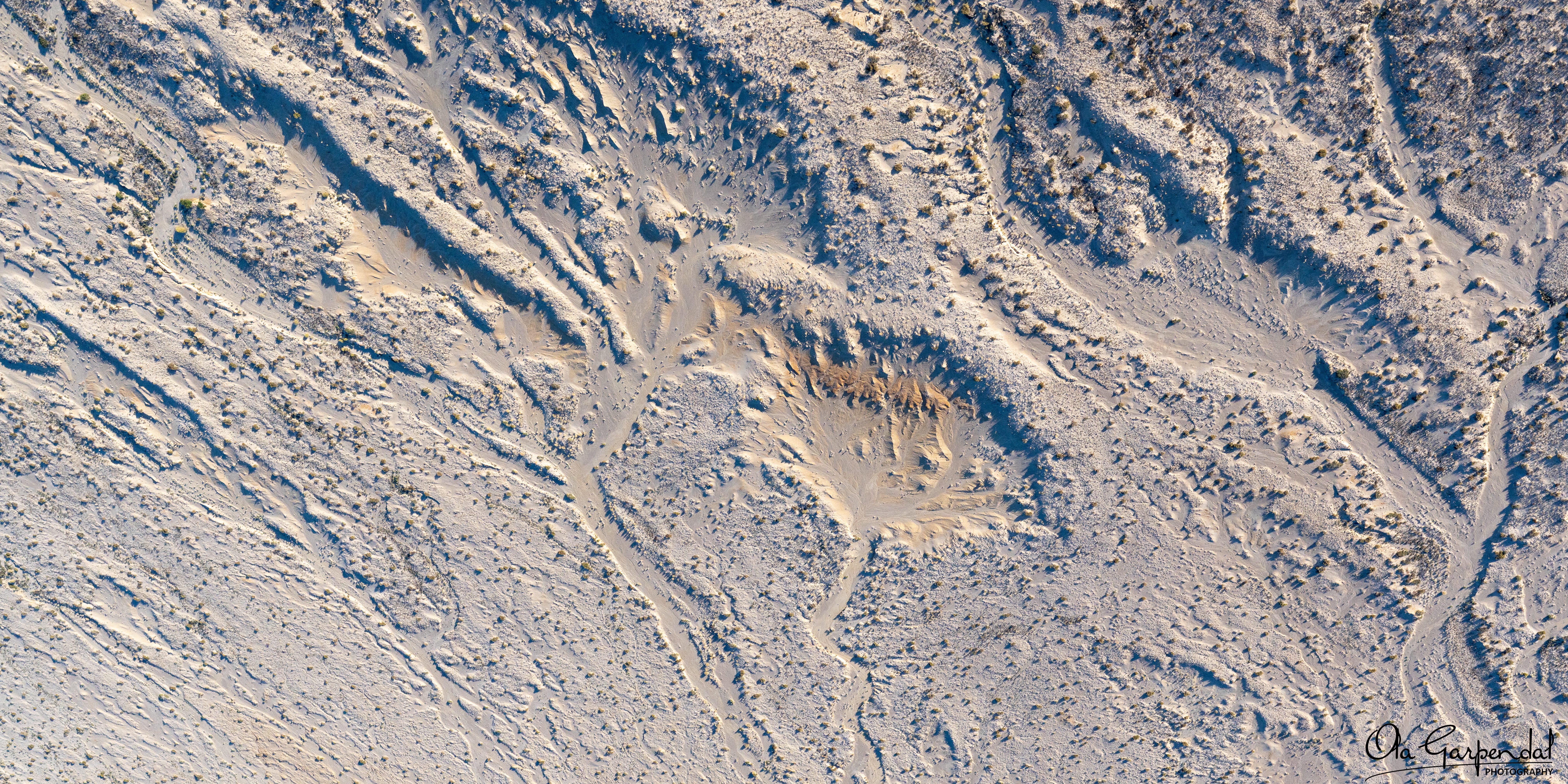
Kati Thanda–Lake Eyre rarely looks like this. In late May 2025, floodwaters moving slowly down Australia’s vast interior drainage network reached the lake bed, triggering one of those rare, temporary transformations that turn an ancient salt pan into something dynamic and alive. Salt Veins was made from the air during that window — a moment when water had moved through the landscape, sculpted it, and begun to recede, leaving its signature pressed into the surface in the form of branching salt channels radiating outward from a central sediment formation.
The aerial perspective does something particular to this landscape. Without horizon or sky to anchor the eye, the image reads as pure pattern — a network of pale channels threading outward across a textured salt crust, flanked by shadow and punctuated by sparse desert scrub. The branching geometry feels almost biological: less like eroded terrain and more like a vascular system, or the magnified cross-section of some ancient material. It is a formation shaped over millennia, photographed in a moment that may not repeat for years.
The palette is cool and restrained. Blue-grey shadow fills the channel edges; bleached white salt dominates the open ground; faint golden warmth catches the raised crust where the light falls at a low angle. There is no drama in the conventional landscape sense — no storm, no colour, no scale reference — only the quiet authority of geology rendered from above, in fine detail.
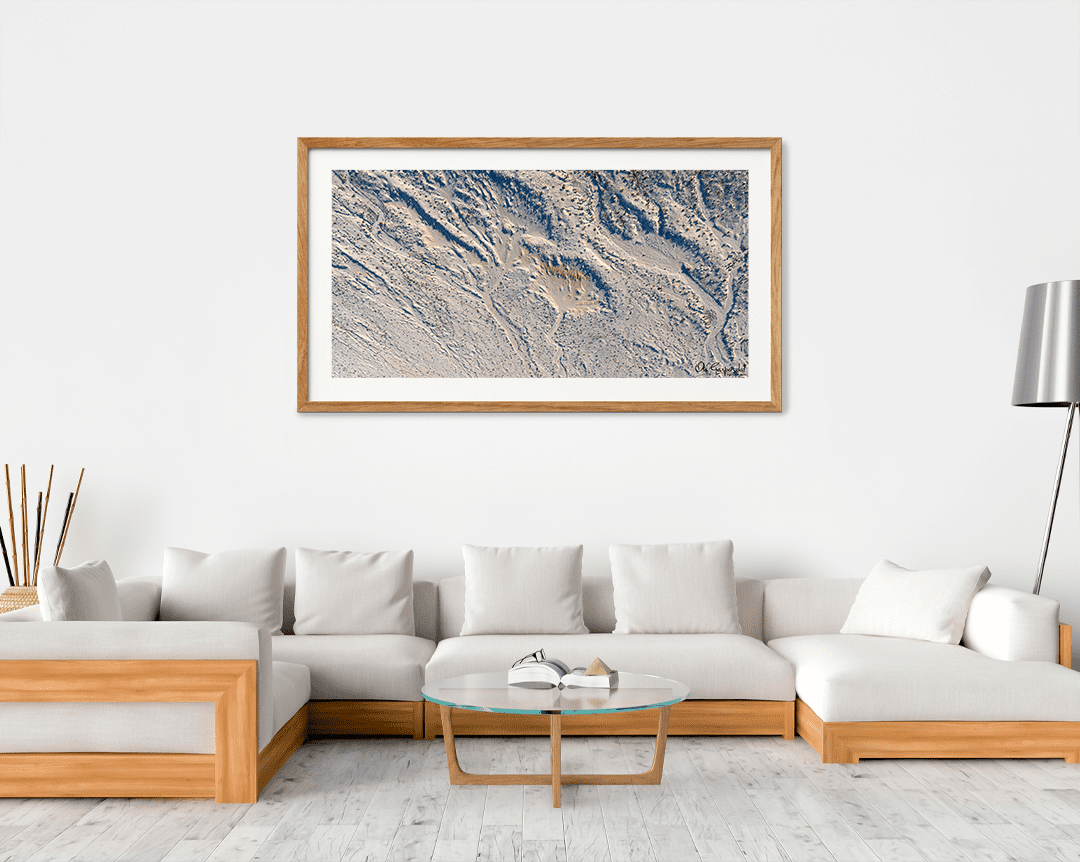
As a print, Salt Veins works at scale. The surface detail — micro-ridges in the salt crust, the gradation of tone within each channel — rewards close inspection, making it well suited to spaces where a viewer can approach the work. It sits naturally in interiors anchored by natural materials, muted tones, or architectural precision, and holds its own as a singular statement piece where something contemplative and visually layered is called for.
Reviews
There are no reviews yet.